
Home › Capabilities › Regulatory & Compliance Testing
Test anything. Evaluate it against any regulation.
Environmental quality, food safety, pharmaceutical and product testing — any analyte measured against a standard. OpenELIS evaluates results against configurable regulatory thresholds and flags pass, marginal, or fail automatically. Environmental testing is the built-out example; the engine works for any regulated domain.
Try the demo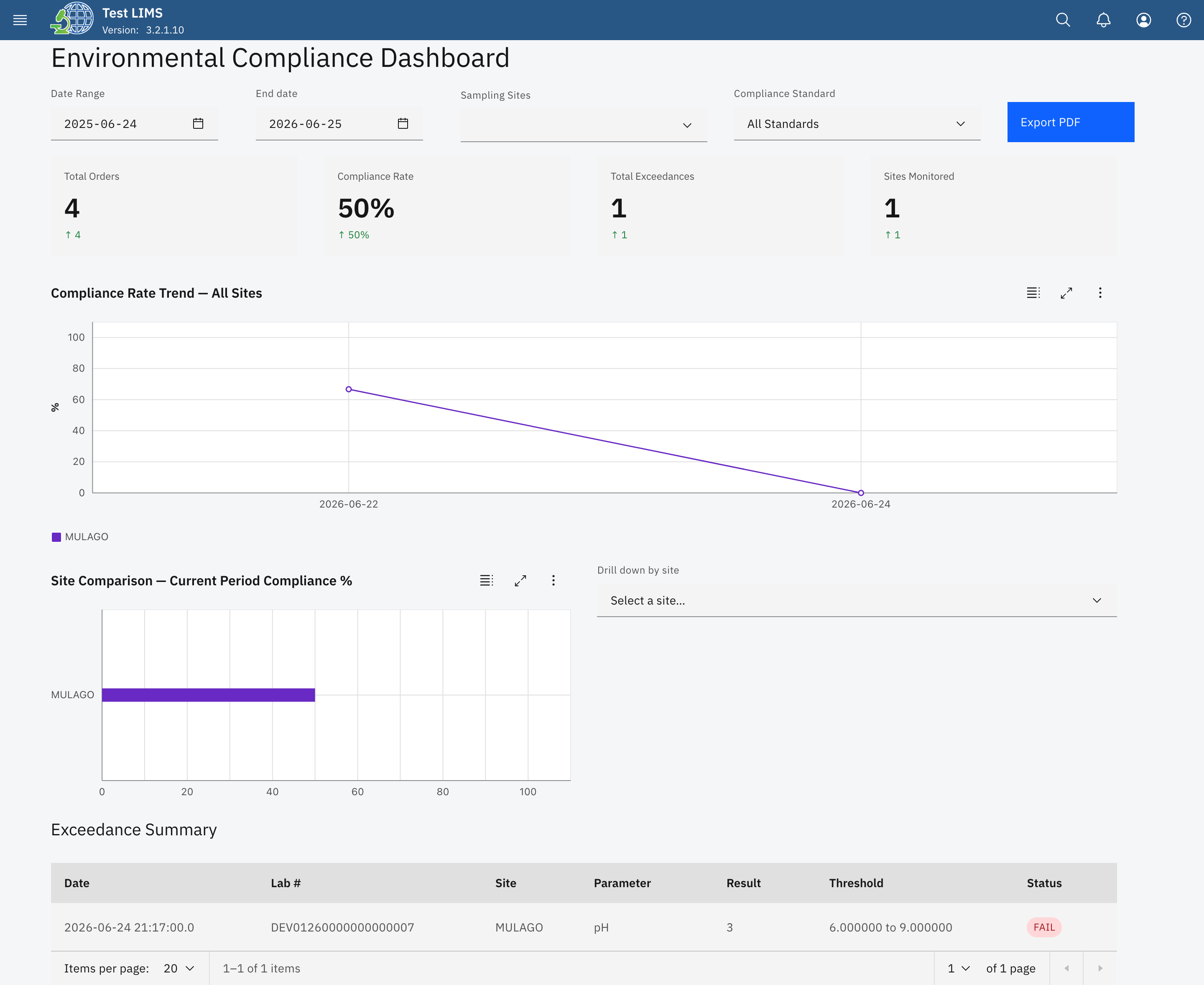
Why it matters
A huge share of laboratory work is regulatory: does this result comply with a standard? Water against an environmental quality limit, food against a safety threshold, a drug batch against a pharmacopeia spec, a product against a technical regulation. Most clinical LIMS have no concept of a regulatory threshold, so these labs fall back to spreadsheets and manual sign-off. OpenELIS builds compliance evaluation into the result itself — configure the standard once, and every result is scored against it automatically, with the threshold and source regulation traveling all the way through to the certificate.
One engine, many regulated domains
The compliance evaluation engine doesn't care what the sample is — only what standard it must meet. Environmental is the deepest-built example; the same configuration powers any regulated testing.
Environmental
Water, soil, air, and waste against quality regimes like Indonesia's PP 22/2021, WHO Drinking Water Guidelines, EPA NPDWR, and the EU Water Framework Directive. Built out with the SILNAS partnership.
Food safety
Contaminant, residue, and microbiological limits against national food-safety codes — the same threshold-evaluation and certificate workflow.
Pharmaceutical & drug
Assay, purity, and quality parameters against pharmacopeia specifications for medicines-quality and drug-testing laboratories.
Product & technical
Any product tested against a technical regulation or specification — configure the standard, and results are evaluated and certified the same way.
The screenshots below show the environmental build; the workflow is identical for any regulated domain.
Key capabilities
Sample types beyond the clinic
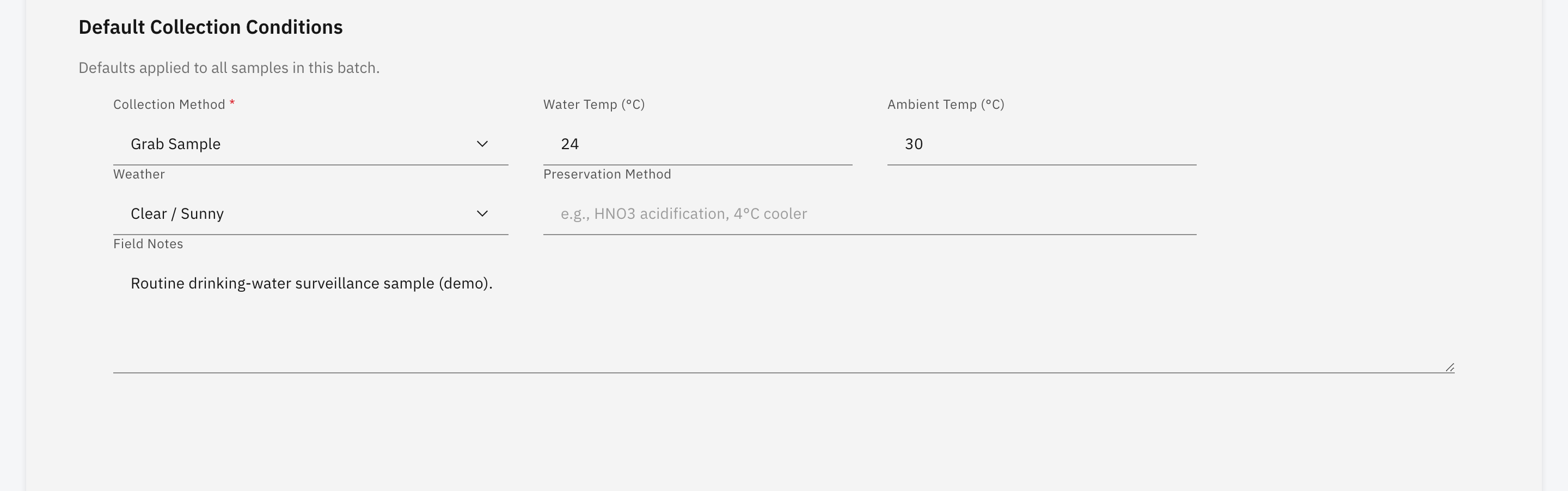
Water (drinking, surface, waste), soil, air, sediment, and food matrices — each with its own field set for collection method, container, preservation, and location. Clinical / Environmental / Both is a first-class attribute on every sample.
Configurable quality regimes
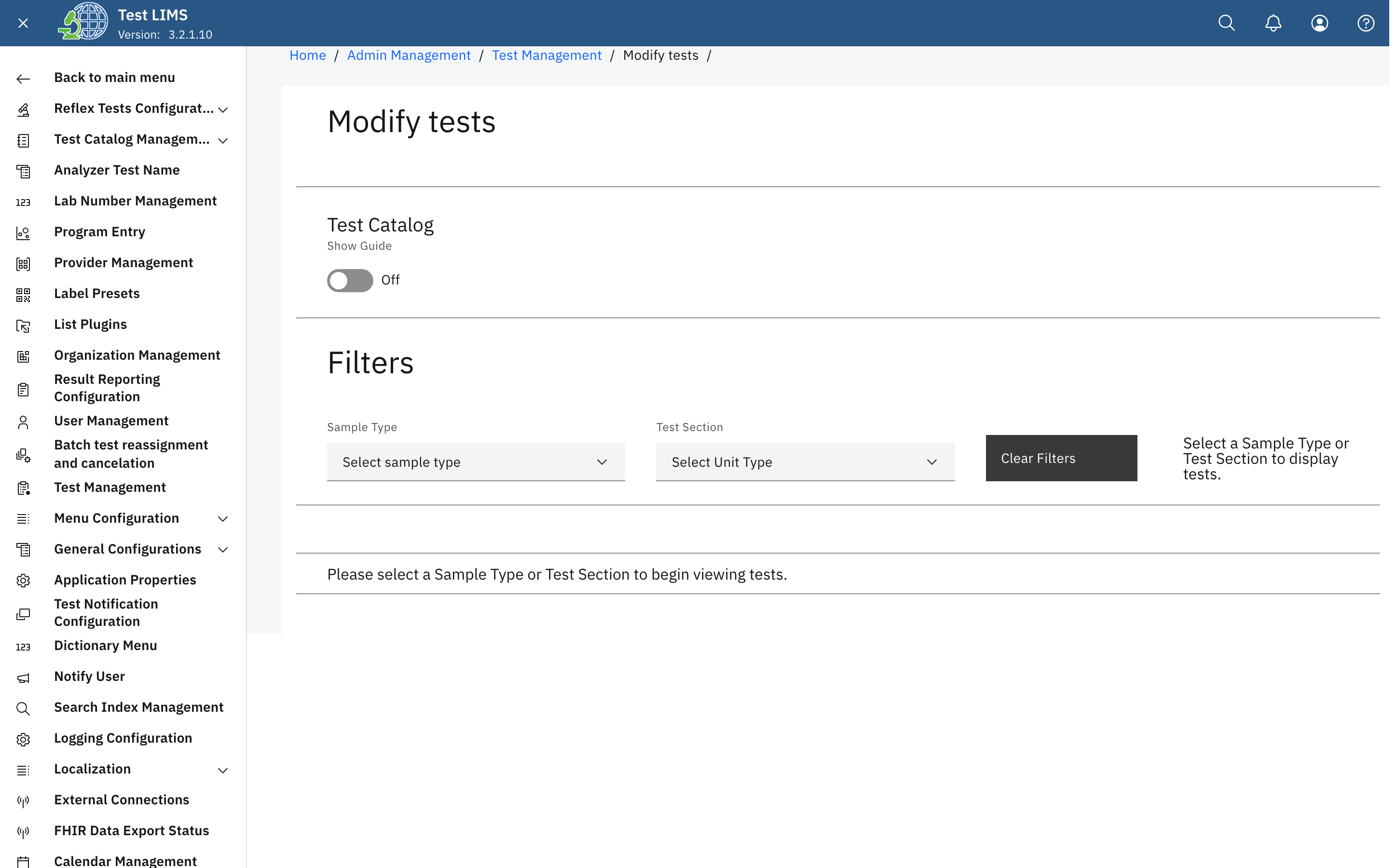
Plug in your country's standards with configurable threshold sets per test. Ships with Indonesia's PP 22/2021, PP 41/1999, and PermenLH 5/2014, plus WHO, EPA, and EU Water Framework references.
Sampling-site registry
Site-based registration — the right abstraction when the "subject" is a river, watershed, or treatment plant. GPS coordinates, site reference IDs, and watershed metadata travel with every sample.
Compliance flagging in validation
Results auto-evaluate against regulatory thresholds with pass / marginal / fail indicators alongside clinical reference ranges. The Laporan Hasil certificate-of-test export ships for Indonesia; the framework supports country-specific templates anywhere.
What it looks like in OpenELIS
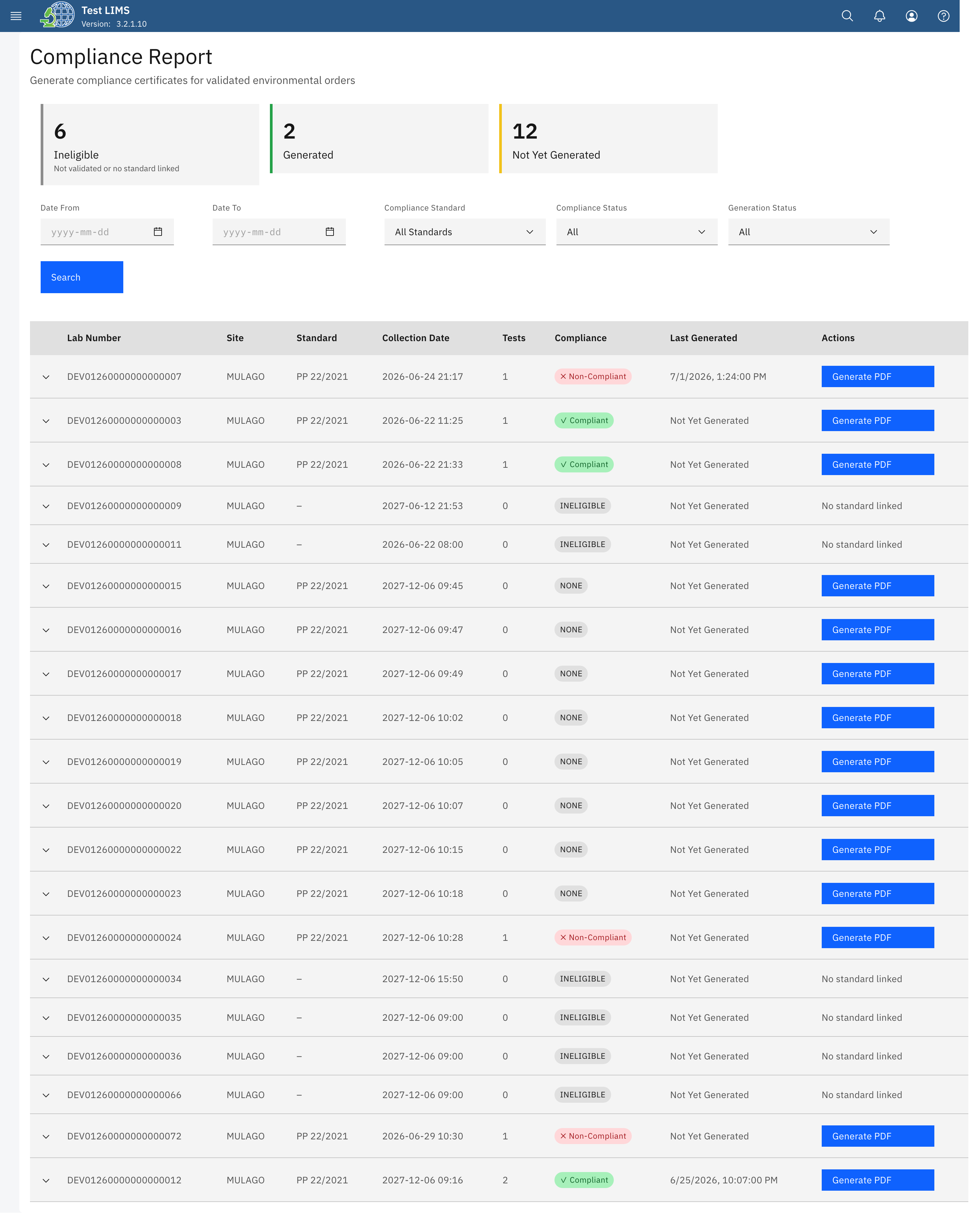
Every validated environmental order is scored against its quality standard automatically — Compliant, Non-Compliant, or Ineligible — with a one-click certificate (Laporan Hasil / Sertifikat Hasil Uji) for each. Try this yourself in the demo →
Under the hood
- Sample classification. Sample types defined in admin config; field sets bound per type; collection metadata (GPS, container, preservation) modeled as standard sample fields.
- Quality standards. Configurable threshold sets attached to test definitions; multi-tier evaluation (pass / marginal / fail).
- Compliance reporting. Laporan Hasil ships as a country-specific template; the framework supports templates anywhere else.
- Holding-time auto-calculation. SOP-driven holding-time tracking and worklist deadline enforcement.
- Pre-analytical eligibility gate. Sample acceptance/rejection with resampling workflow.
- Audit trail. Same event model as clinical — chain of custody, sample movement, and result review all logged.
Standards: ISO 17025 and ISO 15189 compatibility; FHIR Observation resources with compliance metadata for downstream surveillance.
Where to go next
Try it in the live demo
Open the Environmental order workflow and compliance dashboard in a real OpenELIS instance — no install required.
Launch the demo →Read the user manual
The environmental surveillance workflow end to end — order entry, compliance evaluation, and the certificate.
Open the manual →Explore the source
OpenELIS is open-source under the Mozilla Public License. Browse the code, issues, and roadmap on GitHub.
View on GitHub →Powered by the OpenELIS platform
Environmental testing runs on the same shared engine as every other domain — you don't give anything up by using it for water, soil, and air.
Interoperability
Results flow to national surveillance systems and the wider health network automatically. See platform →
Quality control
The same Westgard/Levey-Jennings QC engine applies to regulated methods. See platform →
Security & audit
RBAC, SSO, and full chain-of-custody logging across every sample type. See platform →
Sample & storage
Freezer monitoring and storage hierarchies handle these samples too. See platform →
Part of a One Health platform
Environmental testing doesn't stand alone
Ministries running One Health surveillance track human, animal, vector, and environmental health together. OpenELIS handles all of it in one system — the same platform that runs your clinical lab runs your vector program and your water-quality monitoring.
Testing anything against a regulation?
Environmental, food, pharmaceutical, product — if it's measured against a standard, OpenELIS can evaluate and certify it. Bring your regulations and let's talk deployment.
Contact us